
Stingray Safety
Stingray Injuries
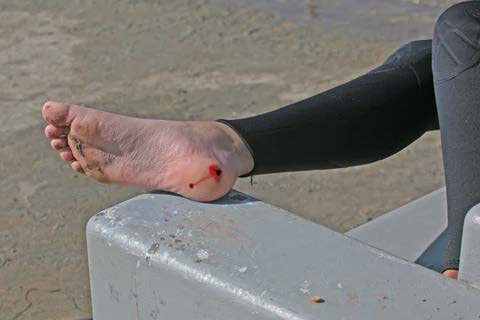
What is A Stingray Sting?
Stingrays are bottom feeders that live in the shallows, where beachgoers tend to hang out in the
water. They have a venomous barb on their tail and sting reflexively when they are stepped on
or kicked by unsuspecting beachgoers. The resulting stingray injuries are painful and can cause
lasting complications like infection.
Stingray stings are common in Southern California, especially in the summer. Dr. Chris Lowe of
the CSULB Shark and Stingray Lab estimates that there are over 10,000 stingray injuries per
summer in SoCal .
How to Know if You’ve Been Stung
The initial sting usually feels like a small cut on your foot or ankle, like you stepped on or kicked
a piece of glass. If you feel this you should exit the water and alert a lifeguard right away,
because your symptoms are about to get worse . The stingray barb is coated with a venom that
causes severe pain, although it usually takes about 10 minutes to an hour to fully kick in. After
that the pain can be quite severe, making it hard to walk.
How to Treat a Stingray Sting
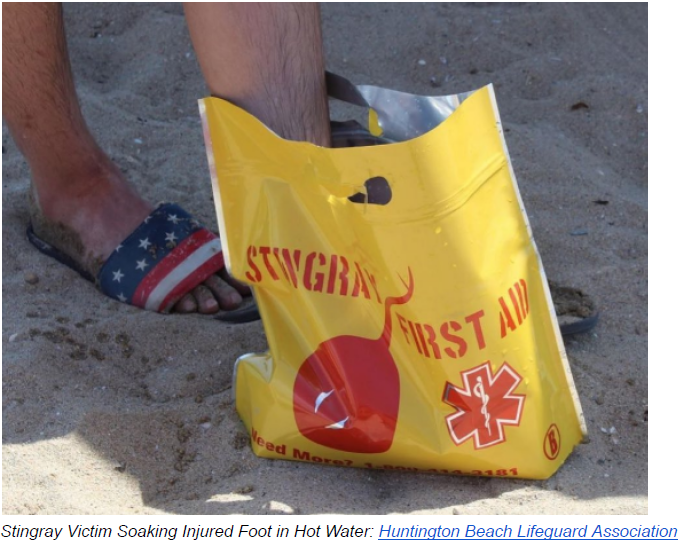
The best thing to do for a stingray sting is to get help from the lifeguards right away . The
lifeguards will either treat your sting at the beach, or if the sting is more severe, the lifeguards
may direct you to the emergency room for further medical care (for example, if the barb is
lodged in the wound, if the sting was directly on a vein or artery, etc.). The treatment steps are
as follows:
1. Make sure that there are no fragments of the barb left in the wound. In some cases, this
may require an x-ray to know for sure, as the fragments can be quite small.
2. Clean the wound with soap and water to reduce the risk of infection.
3. Soak your foot in hot water to reduce the pain.
a. The optimum temperature is as hot as you can stand without causing burns,
typically around 110°F.
4. The initial wave of pain will typically last for about 1-2 hours, although you may have
ongoing symptoms like swelling, itching, etc. over the next several weeks.
5. Monitor for signs of infection over the next couple of days (increased swelling, redness,
pus, etc.). If you notice any, or are concerned that the injury is getting worse, go see a
doctor.
If there are no lifeguards on duty, you can choose between self-treatment (for more minor
stings), or going to a doctor/urgent care/emergency room (more severe stings). You should take
particular caution if any of the following are true:
● the wound is bleeding profusely
● you can see part of the barb stuck in the wound
● you are allergic to stingray venom or show any signs of an allergic reaction like: hives,
swollen throat, or trouble breathing (this is rare)
How to Avoid Being Stung
The first thing to understand is that stingrays are not aggressive and only sting in self-defense.
However, they are bottom-feeders, and bury themselves in the sand, then sting people who
accidentally touch them. Here are the best ways to avoid being stung:
1. Spend as little time as possible touching the sea floor. If you are doing a board sport,
spend as much time as possible on your board.
2. When you are unable to avoid touching the bottom, do The Stingray Shuffle , where you
drag your feet along the sand rather than picking them up with each step. This way you
are less likely to step directly on a stingray, and more likely to kick the edge of it, which
makes it less likely to sting you.
3. There is commercially-available footwear that you can consider wearing for additional
stingray protection, for example:
a. Bart’s Bay Armor Wading Boots
b. DragonSkin Stingray Resistant Booties
c. RayGuard Reef Boots
4. Be aware of when and where stingrays are most common, and take particular caution in
these scenarios. Stingrays generally prefer:
a. Warmer water–approximately 75% of yearly stingray injuries in Southern
California occur from June to August . This is also the reason that stingray injuries
are so common in Southern California, yet practically non-existent at beaches
north of Santa Barbara.
b. Calmer water (eg, beaches with smaller waves, lagoons, and bays)
c. Sandy-bottomed locations
Article Written in Collaboration with DragonSkin Stingray-Resistant Booties